 Focus Grappling
Free guide
BJJ glossary
93 words you'll hear on the mat, in plain English, with a picture of every position.
Gym & culture · Competition & ranks · Submissions · Positions & guards · Moves & concepts · Technique guide
Gym & culture
- Academia
- The gym or academy where you train.
Portuguese
- Drilling
- Repeating a technique with a cooperative partner to build it into muscle memory.
- Flow roll
- Light, relaxed sparring where both people let techniques happen to practise movement.
- Gi
- The traditional uniform: jacket, trousers and belt. Also called a kimono.
Portuguese: kimono
- Mestre
- Master: a title for very senior black belts.
Portuguese
- No-gi
- Training without the gi, usually in a rash guard and shorts or spats. No collar or sleeve grips.
- Open mat
- An unstructured session for free sparring and drilling.
- Oss
- All-purpose greeting and acknowledgement: hello, thanks, understood, respect.
Japanese origin
- Positional sparring
- Sparring that starts from a set position (e.g. side control) with a specific goal.
Also: specific training
- Professor
- The instructor. Traditionally a black belt, though used for many head coaches.
Portuguese
- Rash guard
- Tight, stretchy training top used in no-gi (and under a gi).
- Roll
- Live sparring. "Want to roll?" means "Want to spar?"
Portuguese: rolar
- Rolling partner
- Anyone you spar with. Keep track of yours in Sparring partners.
- Spats
- Tight leggings worn for no-gi.
- Tap
- Tapping your partner (or the mat) to submit. It means stop immediately.
Portuguese: bater
- Tap early
- Advice to submit before a lock or choke hurts you. There's no shame in tapping in training.
- Tatami
- The mats you train on.
Japanese
- Tori
- The person doing the technique.
Japanese
- Uke
- The training partner the technique is done to.
Japanese
Competition & ranks
- ADCC
- The most prestigious no-gi submission grappling competition.
- Advantage
- A near-score, used as a tie-break when points are level.
Portuguese: vantagem
- Belt
- Rank in BJJ. Adult order: white, blue, purple, brown, black.
Portuguese: faixa
- Coral belt
- Red-and-black then red-and-white belts awarded to black belts after decades.
- IBJJF
- International Brazilian Jiu-Jitsu Federation: runs the biggest gi competitions and sets common rules.
- Kids' belts
- Grey, yellow, orange and green belts for under-16s.
- Penalty
- Given for stalling or illegal moves; enough penalties can lose the match.
Portuguese: punição
- Points
- IBJJF scoring: takedown 2, sweep 2, knee on belly 2, guard pass 3, mount 4, back control 4.
Portuguese: pontos
- Stalling
- Not trying to progress or attack. Penalised in competition.
- Stripes
- Tape on the belt showing progress within a rank, usually up to four.
Portuguese: graus
- Weigh-in
- Checking you're within your weight class, in the gi for IBJJF events.
Submissions
- Americana
- Figure-four shoulder lock bending the arm towards the head.
Also: keylock
- Anaconda
- Head-and-arm choke, rolling from the front headlock.
- Arm triangle
- Choke using their own arm and your arm around the neck.
Japanese: kata gatame
- Armbar
- Straightening the elbow against your hips.
Portuguese: chave de braço; Japanese: juji gatame
- Bow and arrow
- Gi choke from the back, pulling the collar and a leg apart.
- Choke
- A submission that restricts blood flow to the brain through the neck.
Portuguese: estrangulamento
- Cross collar choke
- Gi choke using both hands deep in the collar.
Japanese: juji jime
- D'Arce
- Head-and-arm choke threading your arm under the neck from the front.
- Ezekiel
- Choke using your own sleeves or forearm, even from inside someone's guard.
Portuguese: ezequiel
- Guillotine
- Front headlock choke.
Portuguese: guilhotina
- Heel hook
- Rotational leg lock attacking the knee. Restricted for lower belts in many rule sets.
- Joint lock
- A submission that bends a joint beyond its range.
Portuguese: chave
- Kimura
- Figure-four shoulder lock bending the arm behind the back. Named after judoka Masahiko Kimura.
Japanese: ude garami
- Kneebar
- Straightening the knee against your hips, like an armbar on the leg.
- Omoplata
- Shoulder lock using your legs, from guard.
Portuguese: shoulder blade
- Rear naked choke
- Choke from the back with the arm around the neck.
Portuguese: mata-leão (lion killer)
- Straight ankle lock
- Leg lock hyperextending the ankle with your forearm on the Achilles.
Portuguese: chave de pé
- Submission
- A choke or joint lock that forces your opponent to tap.
Portuguese: finalização
- Toe hold
- Figure-four lock twisting the foot.
- Triangle
- Choke with your legs around one arm and the neck.
Portuguese: triângulo
- Wrist lock
- Bending the wrist, often from grips. Legal for most belts in the gi.
Positions & guards
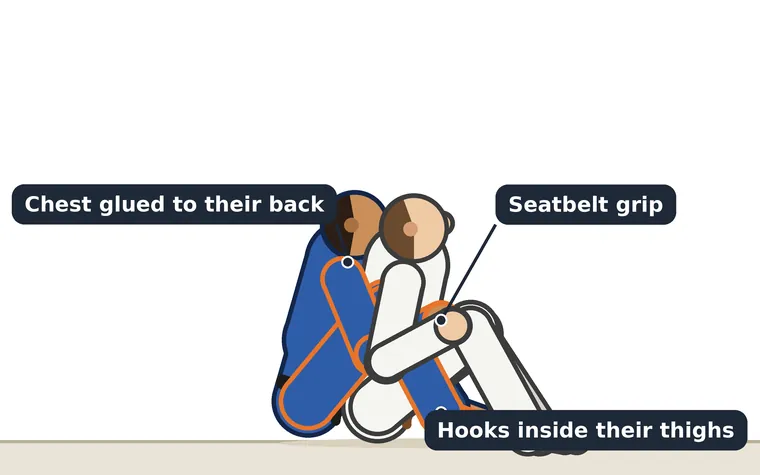
- Back control
- Behind your opponent with hooks in: the most dominant position.
Portuguese: pegada nas costas
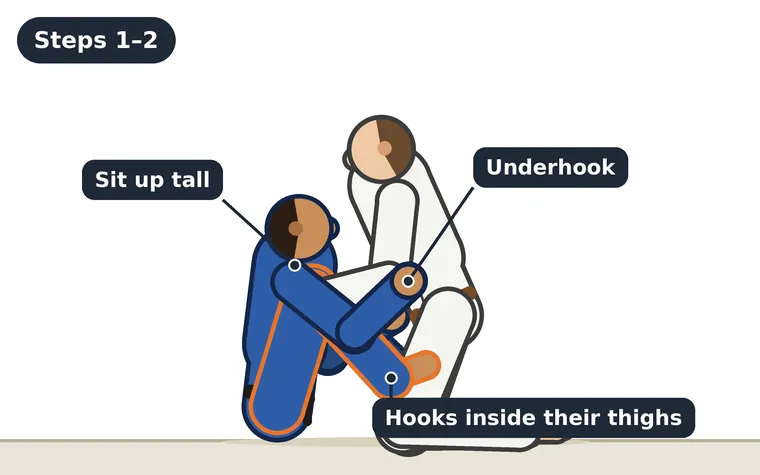
- Butterfly guard
- Seated guard with your feet hooked inside their thighs.
Portuguese: guarda borboleta
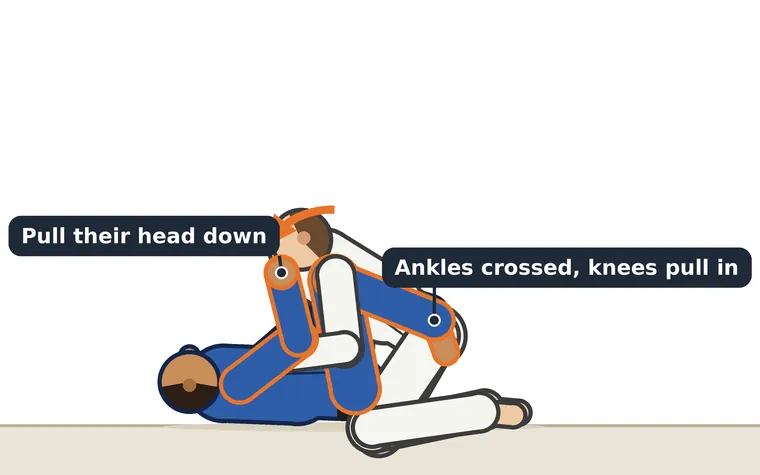
- Closed guard
- Legs wrapped around your opponent with ankles crossed.
Portuguese: guarda fechada
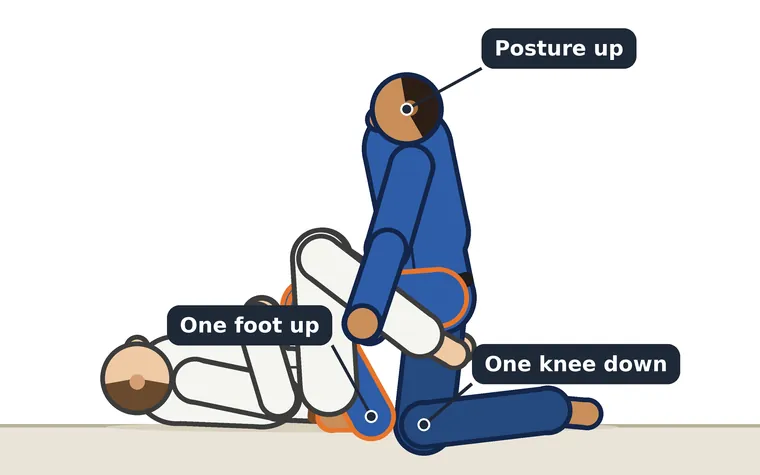
- Combat base
- Top position in someone's guard with one knee down and one foot up.
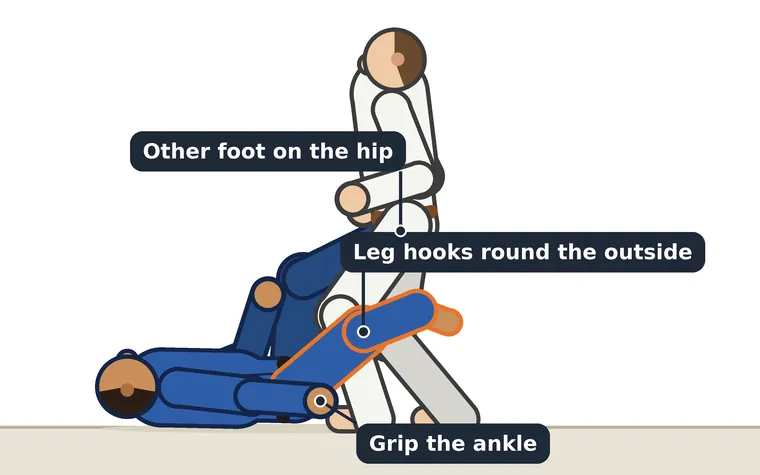
- De La Riva
- Open guard with your leg hooked around the outside of their leg and a grip on their ankle.
Named after Ricardo De La Riva
- Guard
- Any position where you're on your back or bottom, using your legs to control your opponent.
Portuguese: guarda
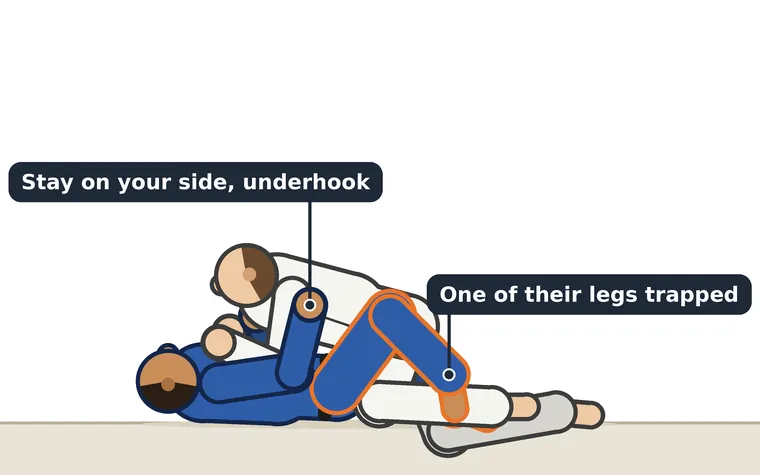
- Half guard
- You trap one of your opponent's legs between yours.
Portuguese: meia-guarda
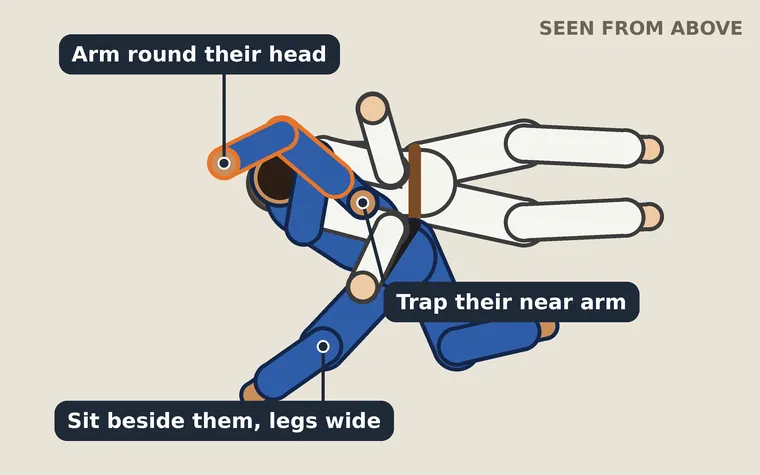
- Kesa gatame
- Scarf hold: side control variation sitting beside them, arm around their head.
Japanese
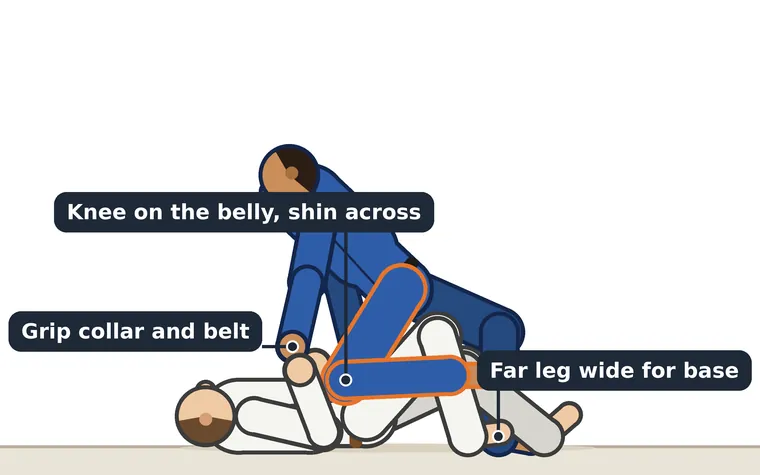
- Knee on belly
- Your knee on their stomach, other leg out for base.
Portuguese: joelho na barriga
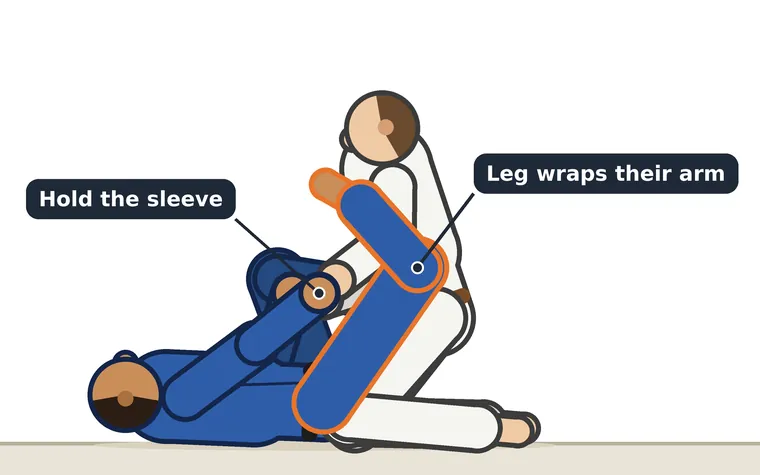
- Lasso guard
- Gi guard with your leg wrapped around their arm while holding the sleeve.
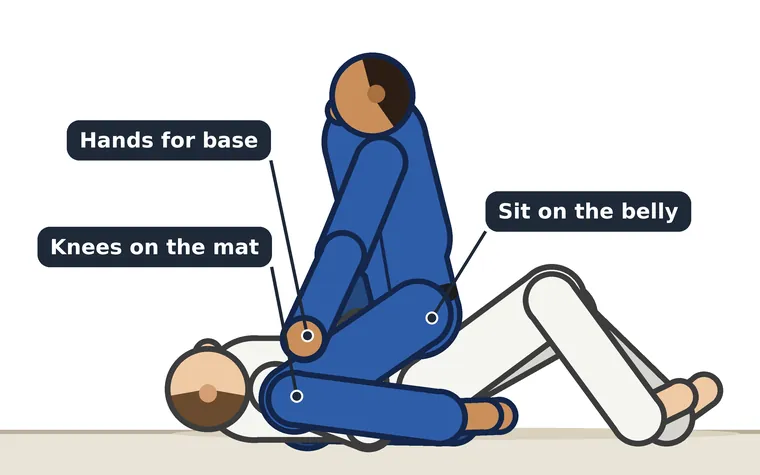
- Mount
- Sitting on your opponent's torso, knees on the mat.
Portuguese: montada
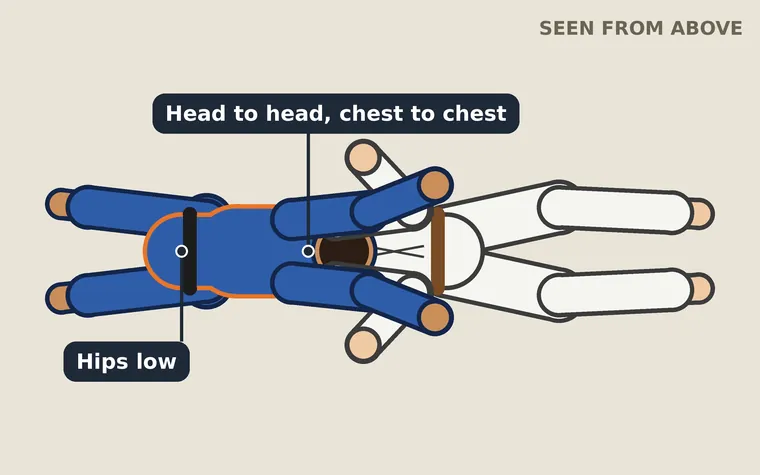
- North-south
- On top, head to head, your chest on their chest facing the opposite direction.
- Open guard
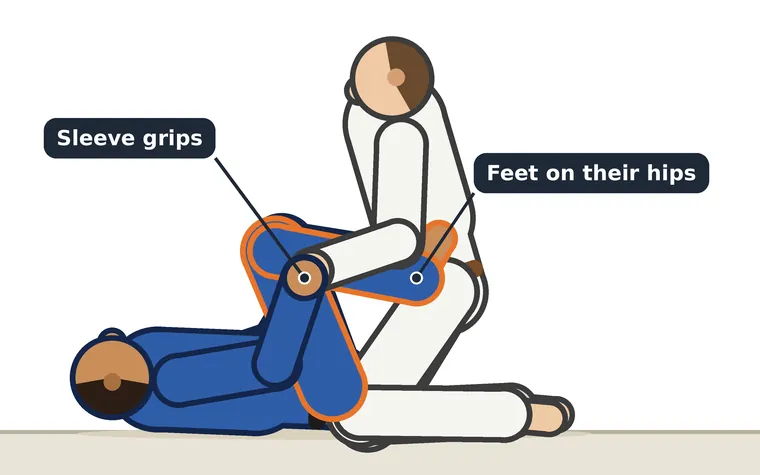
- Any guard where your ankles aren't crossed: feet on hips, hooks, grips on sleeves or legs.
Portuguese: guarda aberta
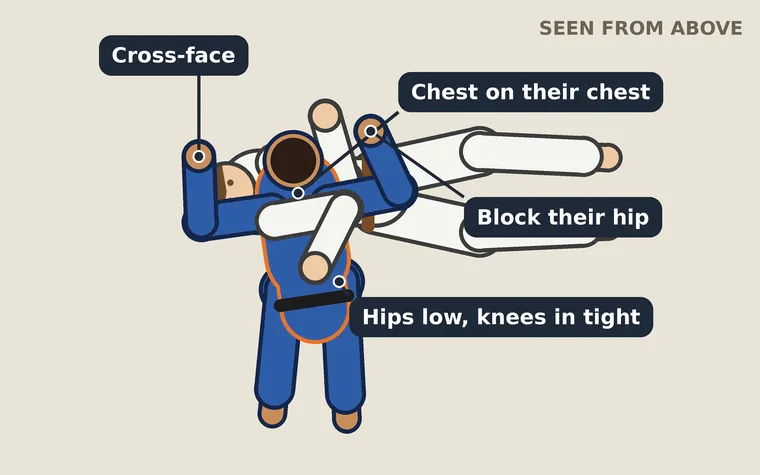
- Side control
- Chest to chest from the side, pinning them.
Portuguese: cem quilos (100 kilos)
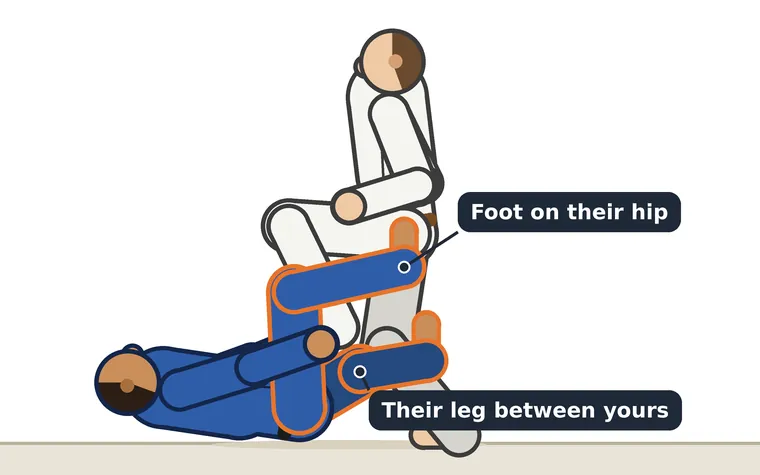
- Single leg X
- Guard controlling one leg between yours, one foot on their hip.
Also: ashi garami
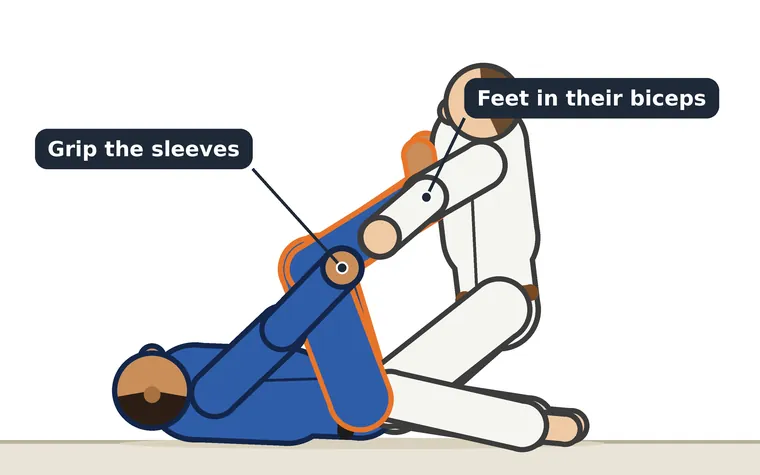
- Spider guard
- Gi guard with sleeve grips and your feet in their biceps.
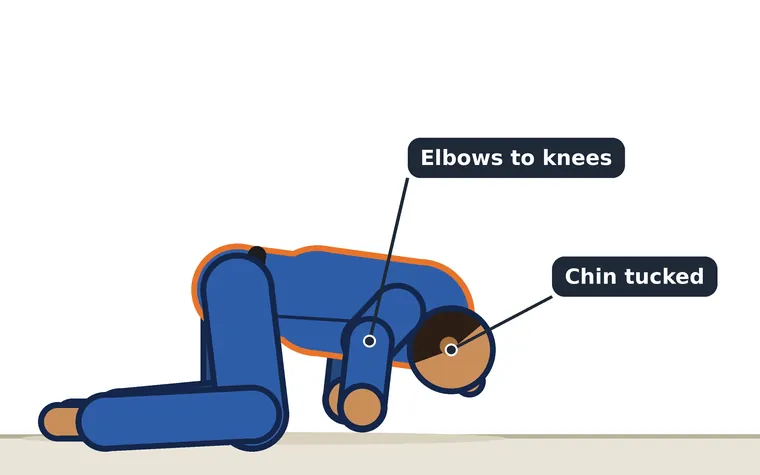
- Turtle
- On your knees and elbows, curled up to defend.
Portuguese: tartaruga
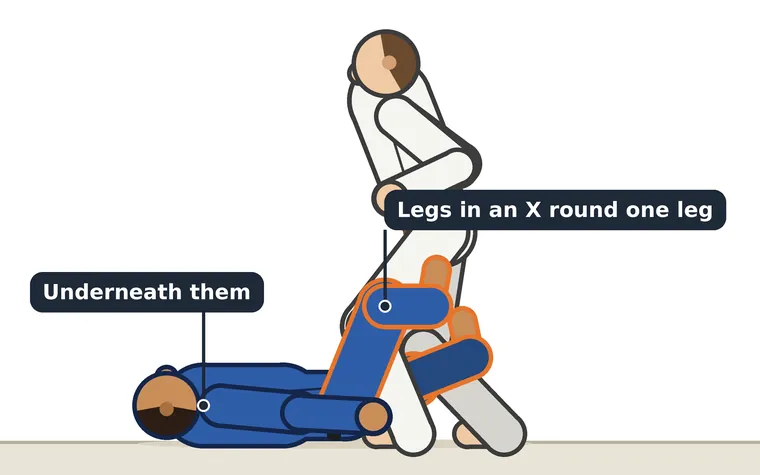
- X-guard
- Underneath your opponent with your legs forming an X around one of their legs.
Moves & concepts
- Base
- Your balance and stability: how hard you are to sweep or knock over.
Portuguese: base
- Berimbolo
- An inverting back-take from De La Riva guard.
- Bridge
- Lifting your hips explosively to off-balance someone on top.
Portuguese: upa / ponte
- Cross-face
- Your forearm across their face/jaw turning their head away, used in side control and half guard.
- Frame
- Using your arms or legs as rigid structures to hold distance, not to push.
- Grips
- How you hold the gi or body. Winning the grip fight often decides the exchange.
Portuguese: pegada
- Guard pull
- Sitting to your guard with grips instead of taking them down.
Portuguese: puxar para a guarda
- Hooks
- Your feet hooked inside their thighs, e.g. in back control or butterfly guard.
- Isolate
- Separating one limb or the head from the rest of the body before attacking it.
- Kuzushi
- Breaking someone's balance before a throw or sweep.
Japanese
- Level change
- Dropping your hips before shooting a takedown.
- Overhook
- Your arm wrapped over their arm, trapping it. Also called a whizzer.
- Pass
- Getting past your opponent's legs to side control, mount or similar. Scores 3 points.
Portuguese: passagem
- Posture
- Keeping your spine straight and head up, especially inside someone's guard.
Portuguese: postura
- Scramble
- A fast, messy exchange where both people fight for the top or back.
- Seatbelt
- Back-control grip: one arm over the shoulder, one under the armpit, hands clasped.
- Shrimp
- Hip escape: moving your hips away to create space.
Portuguese: fuga de quadril
- Sprawl
- Throwing your legs back and hips down to stop a leg takedown.
- Stack
- Pushing someone's legs and hips over their head to pass or escape a submission.
- Sweep
- Reversing position from bottom (guard) to top. Scores 2 points.
Portuguese: raspagem
- Takedown
- Taking a standing opponent to the ground. Scores 2 points.
Portuguese: queda
- Technical stand-up
- Standing up safely from sitting with one hand posted and one hand up.
- Transition
- Moving from one position to another, e.g. side control to mount.
- Underhook
- Your arm under your opponent's armpit, controlling their upper body.